
NIH Employer Issue Brief
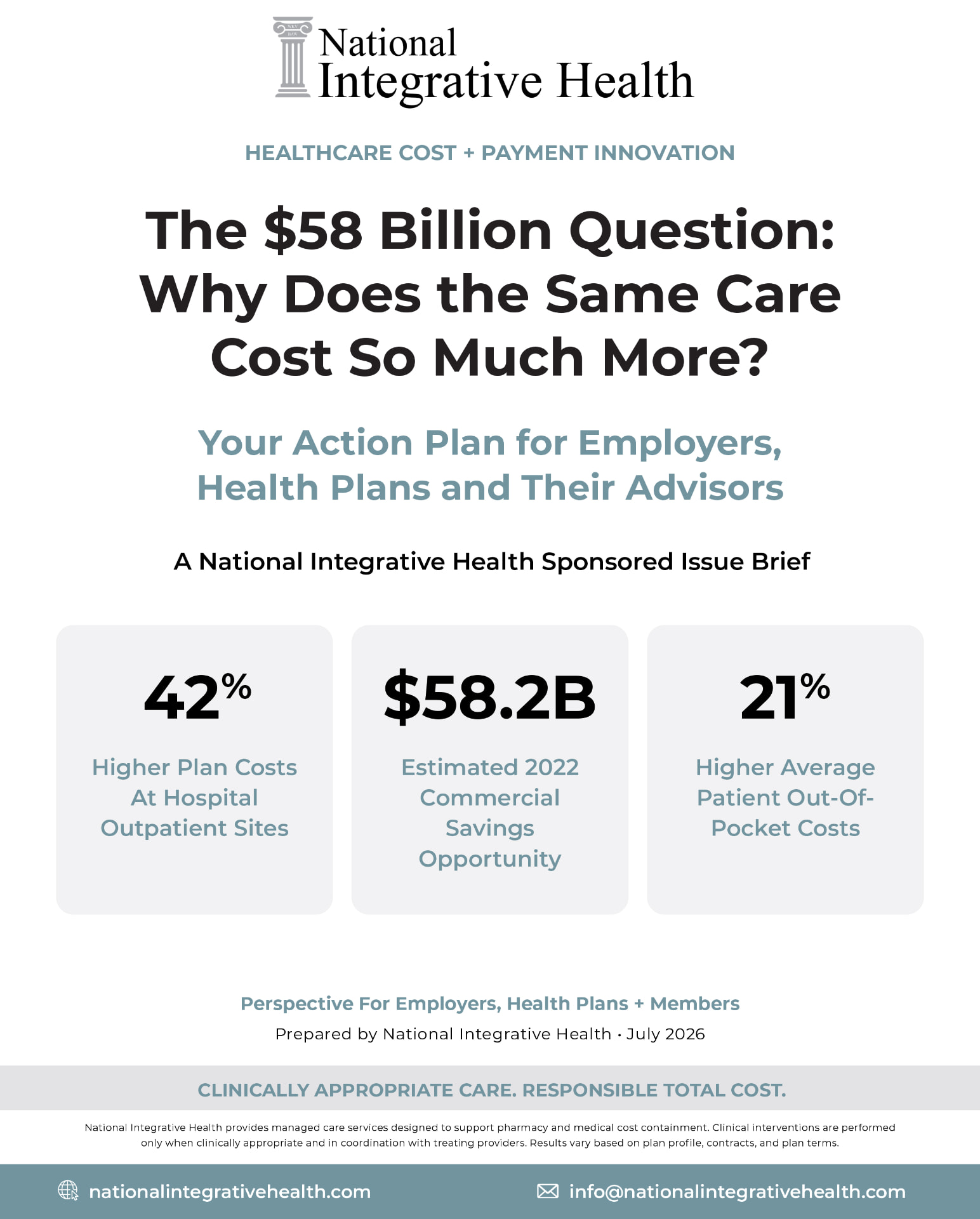
The $58 Billion Question: Why Does the Same Care Cost So Much More?
Your Action Plan for Employers, Health Plans and Their Advisors
Where care is delivered can significantly affect what a health plan and its members pay—even when the treatment is the same. This NIH issue brief examines how employers and their advisors can identify avoidable site-of-care cost differences, evaluate clinically appropriate alternatives, and strengthen oversight of specialty and infusion spending.
What You'll Learn
A practical framework for examining site-of-care costs
WHY LOCATION MATTERS
Understand why identical or comparable treatments can produce different costs depending on where and how care is delivered.
WHERE EMPLOYERS CAN INTERVENE
Explore opportunities involving benefit design, provider coordination, clinical appropriateness, sourcing, and site of care.
HOW TO EVALUATE THE FULL EVENT
Look beyond an individual claim to consider clinical needs, member impact, treatment setting, and total net cost.
Developed for the stakeholders shaping plan spend
This issue brief was developed for self-funded employers, benefits leaders, brokers, consultants, health plans, TPAs, PBMs, captives, consortiums, stop-loss partners, and other advisors seeking greater visibility into high-cost specialty and infusion claims.
The $58 Billion Question: Why Does the Same Care Cost So Much More?
NIH works with employers and their existing advisors to identify avoidable medication markups, evaluate clinically appropriate alternatives, coordinate interventions, and document realized outcomes.