Results & Impact

Turning high-cost drug and infusion visibility into responsible fiduciary action.

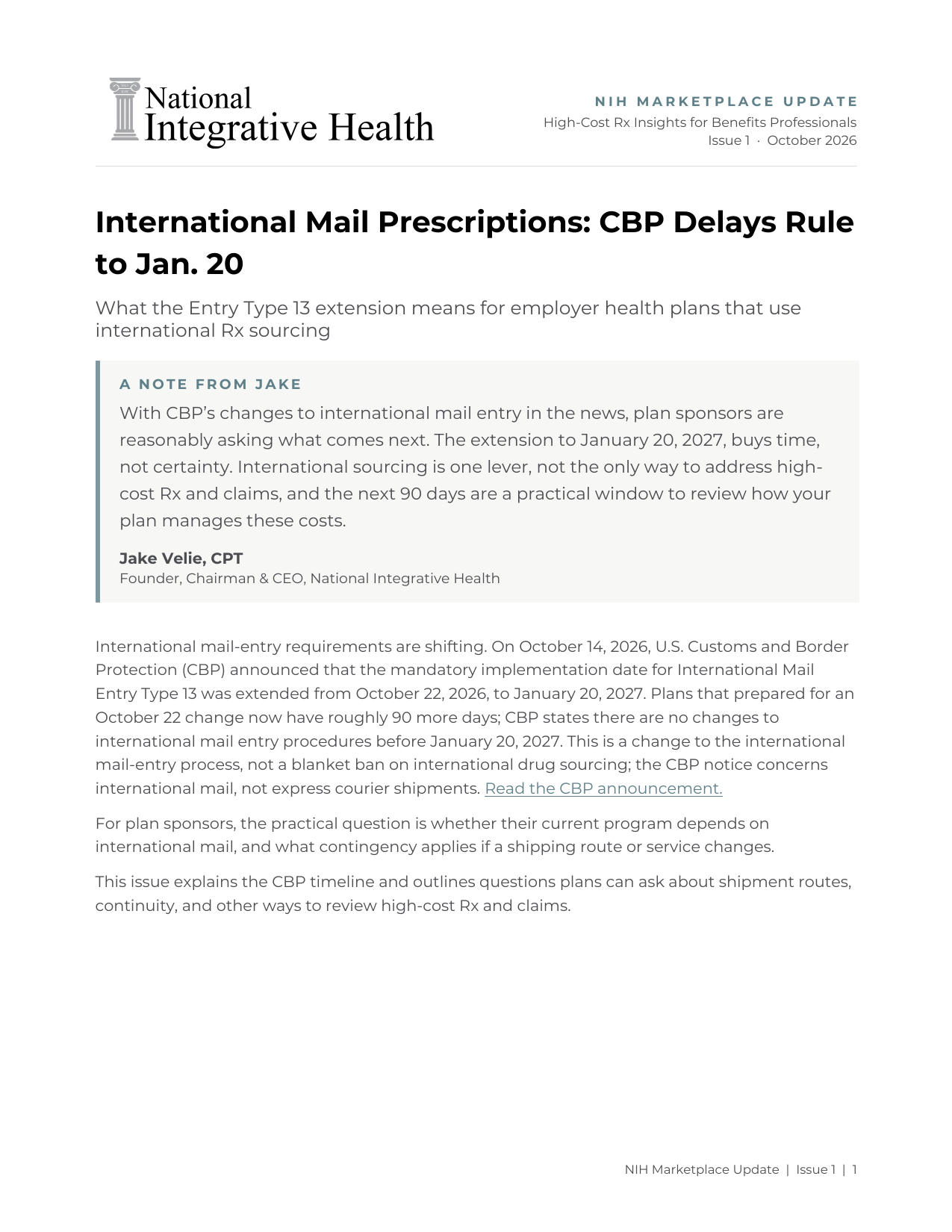
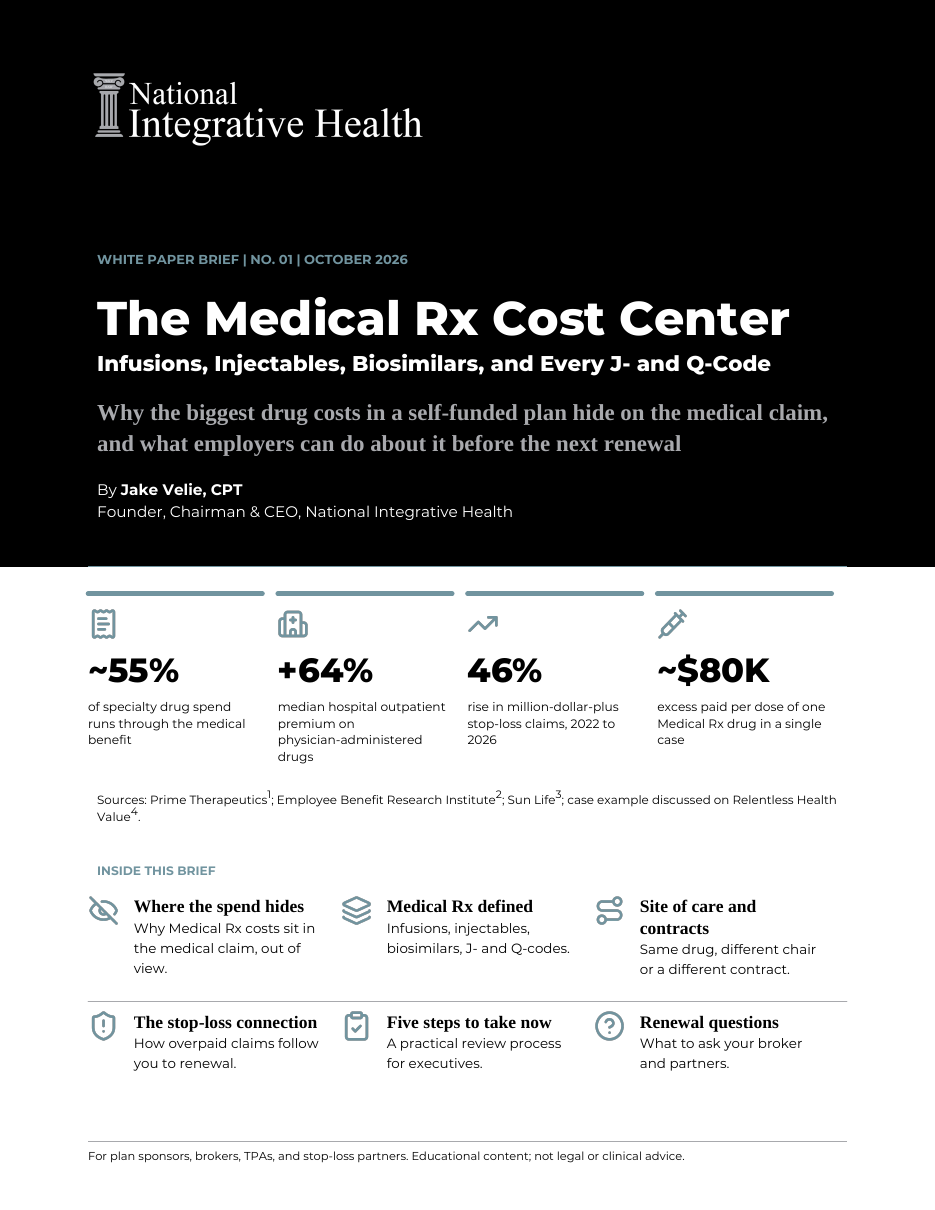
National Integrative Health helps plans translate claims-level visibility into coordinated clinical and financial activity — and then validates the outcomes through ongoing reporting.

In the media

Public Impact

Featured appearances and commentary from NIH leadership on the issues shaping pharmacy cost containment and high-cost claims management.

  • Podcast

    The J-Code Trap: Managing the Exploding Costs of Specialty Drugs

    Featuring
    Jake Velie
    Outlet
    Self-Funded with Spencer
    Date
    June 23, 2026
  • Video

    The Transparency Hype Word: a Preview of NABIP AC 2026 Panel

    Featuring
    Jake Velie
    Outlet
    Rachel Strauss, PBM Princess
    Date
    June 27, 2026

Case studies

Where the Model Becomes Real

Our repricing analyses are built on a simple principle: be transparent with what the plan actually pays. Every outcome is evaluated on a true net basis, with all factors considered and nothing assumed. We take a conservative approach to ensure results are realistic, defensible, and repeatable...not theoretical projections.

Case study — Municipality

Municipality Plan Repricing Analysis

$7,543,118.64

Net plan savings (46.90%)

$417,915.98

Returned to members

120,195
Total claims reviewed
9,150
High-cost claims eligible for intervention (7.61%)
66.31%
Of total plan spend addressed
Situation
Municipal health plan with 120,195 annual pharmacy claims; high-cost specialty claims concentrated in a small share of utilization.
Intervention
NIH Clinical identified 9,150 high-cost claims (7.61% of volume / 66.31% of spend) eligible for MSO sourcing review.
Coordination
NIH Clinical MSO sourcing applied across eligible claims, weighted for rebates and inclusive of all MSO fees.
Plan Impact
$7,543,118.64 net savings (46.90%) on sourced spend after fees and rebate weighting.
Member Experience
$417,915.98 returned to members through reduced out-of-pocket exposure on sourced claims.
Savings Validation
Calculations reconciled against the original 120,195-claim file; sourcing, rebate weighting, and MSO fees included in the net figure.
Caveats
Outcomes specific to this plan's claims profile and contractual arrangements; not a guarantee of future results.
Case study — Corporation

Plan Sponsor Top 25 Script Repricing

$742,226.23

NET PLAN SAVINGS (35.40%)

$331,049.31

Returned to members

1,677
Top 25 highest-dollar scripts reviewed
20%
Rebate weight applied
35.40%
Net savings on affected claims
Situation
Illinois-based corporate health plan; engaged NIH to review Top 25 highest-dollar scripts, totaling 1,677 scripts.
Intervention
NIH Clinical evaluated lower net-cost options for the Top 25 highest-dollar script set.
Coordination
Analysis incorporated a 20% rebate weight across the reviewed claims.
Plan Impact
$742,226.23 net savings (35.40% of the affected claims) after rebate weighting and sourcing.
Member Experience
$331,049.31 returned to members through reduced out-of-pocket exposure on repriced claims.
Savings Validation
Results reconciled against the supplied Top 25 script set; rebate weighting and sourcing factors included in the net figure.
Caveats
Outcomes specific to this plan's claims profile and contractual arrangements; not a guarantee of future results.
Case study content is published only after activity is documented, reviewed, and approved. NIH does not publish hypothetical scenarios or modeled outcomes as case studies.

Insights & Resources

Ideas and Insights for Better Plan Decisions

Explore NIH research, issue briefs, articles, and perspectives from NIH and our industry partners on the clinical and financial issues affecting employer-sponsored healthcare.

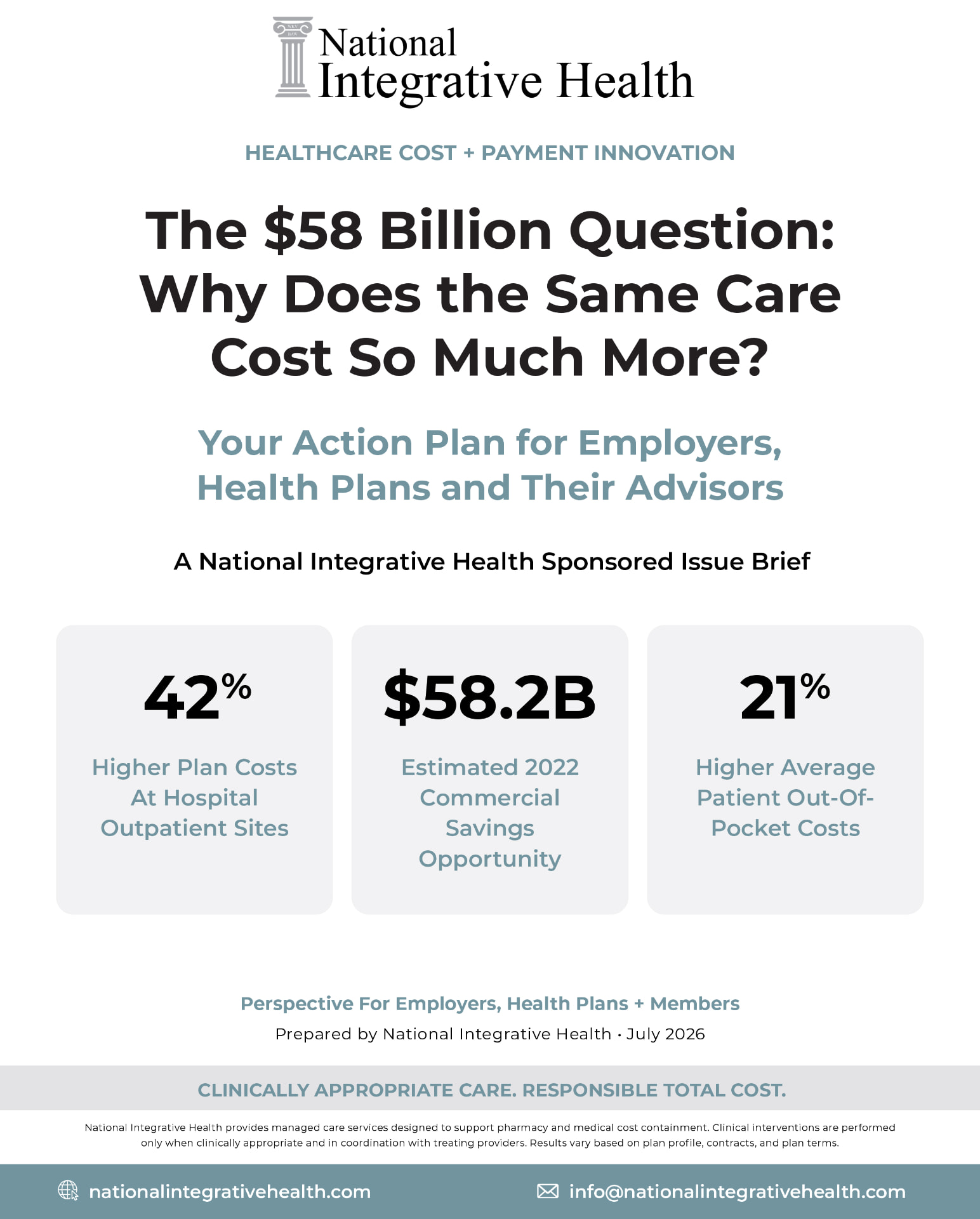
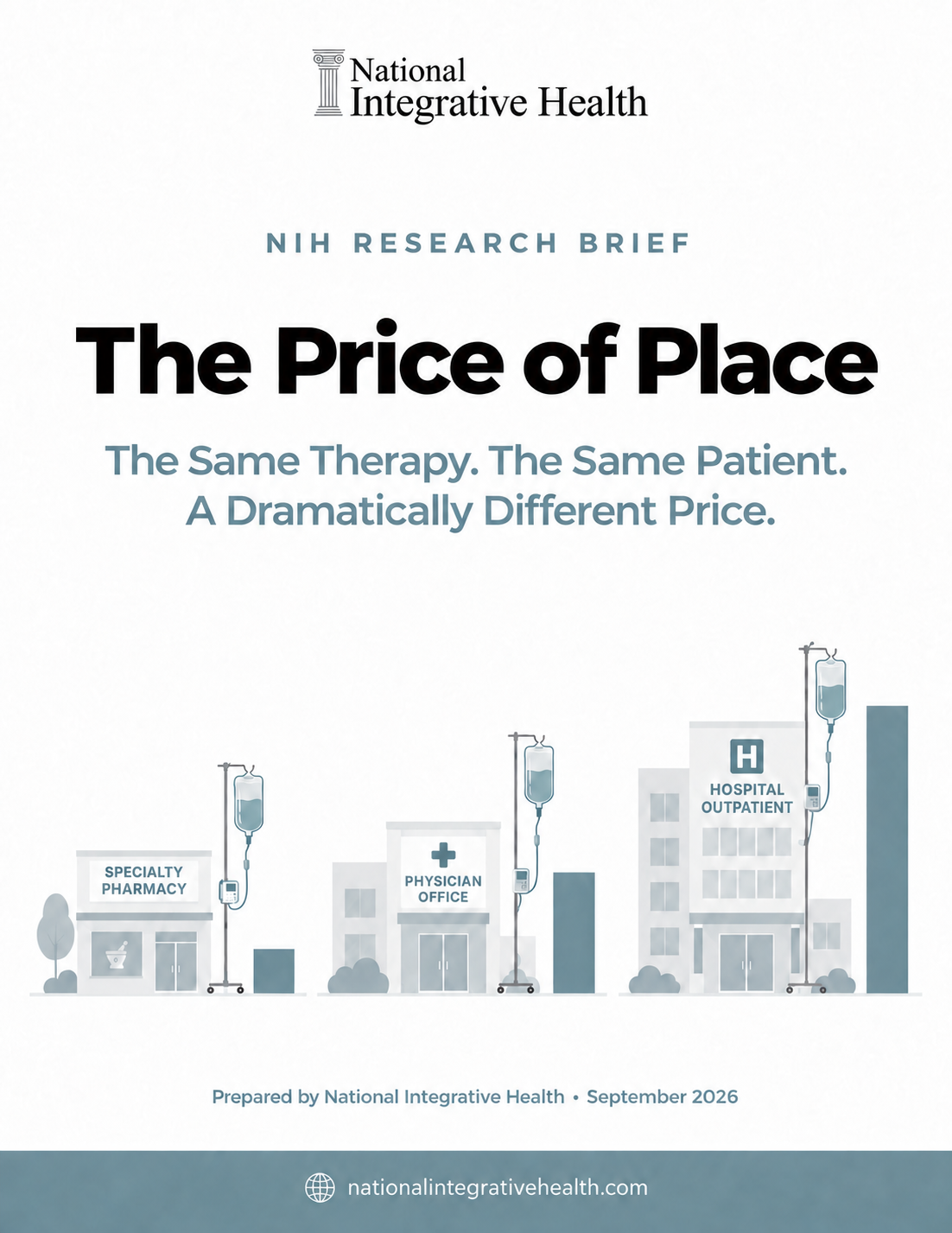
Cover of the NIH employer issue brief, Medicare Embraces Site-Neutral Payments. Why Haven't Employers?

Employer Issue Brief

Medicare Embraces Site-Neutral Payments. Why Haven't Employers?

Explore how site-of-care decisions can affect employer and member costs—and where plan sponsors may be able to intervene.

The Same Treatment Should Not Cost More Because of the Building

Industry Article

The Same Treatment Should Not Cost More Because of the Building

Medicare's expanding use of site-neutral reimbursement points to a much larger opportunity for commercial and employer-sponsored health plans—where the location of care can dramatically affect price even when the treatment and outcome are essentially the same.

Repricing Analysis

How much savings will be found in your plan?

A Repricing Analysis is designed to surface where NIH may be able to help — and where it may not. We’ll review the data, discuss next steps, and identify whether further engagement makes sense for your plan.

The analysis is conducted alongside your existing PBM, TPA, broker, or consultant relationships and is not intended to disrupt incumbent arrangements.

Important disclosures

Outcomes vary based on each plan’s claims profile, contractual arrangements, clinical circumstances, and applicable plan terms.

Information presented on this page is for general informational purposes and is not legal, tax, medical, clinical, actuarial, or benefits advice. Case studies are published only after NIH verifies and approves the underlying activity.